The Hidden Costs of Buy Now Pay Later in 2026: How UK Consumers Can End Up Paying More Than Expected
Buy Now Pay Later (BNPL) has become a standard checkout option across UK online retail. It is now embedded in fashion, electronics, travel bookings, and even everyday shopping baskets. The appeal is straightforward: split a purchase into smaller payments, often with no upfront interest.
But the structure behind BNPL products creates financial behaviours that are not always obvious at the point of purchase. Many users treat it as a budgeting tool rather than a form of credit, even though the financial risk profile can resemble short-term borrowing. The consequences tend to appear later, when multiple agreements overlap or repayments are missed.
This article explains how BNPL works in practice, where the risks emerge, and why the true cost is often behavioural rather than purely financial.
What Buy Now Pay Later actually is and how it works in practice
Buy Now Pay Later services allow consumers to split the cost of a purchase into instalments. In the UK, the most common model is “pay in 3” or “pay in 4”, where payments are spread over several weeks or months. Some providers also offer longer-term financing options with interest.
At checkout, the user is typically offered an alternative payment option alongside debit and credit cards. Approval is often fast and requires minimal friction, which is part of its appeal. In many cases, users are approved based on soft credit checks or internal scoring models rather than a full credit application process.
The main attraction is psychological: the immediate cost feels lower, even though the total obligation remains unchanged.
Why BNPL feels different from traditional credit
One of the main reasons BNPL has grown rapidly is perception. Many users do not classify it as “debt” in the same way they view credit cards or overdrafts. This is partly due to how it is presented at checkout and partly due to its short repayment structure.
However, BNPL is still a form of credit agreement. The key difference is how it is framed and delivered to the user.
Several factors contribute to the perception gap:
- Approval happens instantly at checkout without detailed financial review.
- Repayments are split into small, predictable instalments.
- There is no visible interest in many short-term plans.
- Each purchase is treated as a separate agreement rather than a single credit line.
This separation makes it easier for users to underestimate their total repayment commitments across multiple purchases.
How hidden costs emerge even when interest is “zero”
Most BNPL marketing focuses on “0% interest” products. While this is accurate for many short-term plans, it does not mean the service is cost-free in practice.
Late payment fees and penalty structures
If a payment is missed, providers may apply late fees. These are usually fixed amounts rather than interest rates, but they can accumulate quickly across multiple agreements.
Some users also lose access to future BNPL credit if they miss payments, which can disrupt budgeting habits that rely on instalment flexibility.
Behavioural overspending
The most significant cost is not contractual but behavioural. When payments are split, users tend to focus on affordability per month rather than total spend.
This can lead to:
- Multiple overlapping BNPL plans across different retailers
- Reduced awareness of total monthly obligations
- Purchases made outside original budget intentions
Over time, these small commitments can accumulate into a significant fixed monthly outgo.
Reduced financial visibility
Unlike a single credit card statement, BNPL agreements are often distributed across multiple providers. This fragmentation makes it harder to track total liabilities in one place.
Consumers may underestimate how much of their future income is already committed to repayments.
The impact of BNPL on budgeting and cash flow
BNPL changes how people perceive cash flow. Instead of a single large expense, purchases are converted into multiple smaller obligations spread over time.
This structure can be helpful when used sparingly, but it also creates a false sense of available income. A user may feel financially flexible because they are not paying the full amount upfront, even though the obligation already exists.
In practical terms, this can lead to three common patterns:
- Short-term budgeting distortion, where upcoming payments are underestimated
- Cycle dependency, where BNPL is repeatedly used to smooth cash flow
- Reduced savings capacity due to overlapping instalments
The issue is not the use of instalments itself, but the accumulation of multiple commitments that are not centrally tracked.
Does Buy Now Pay Later affect credit scores in the UK?
Credit reporting for BNPL has evolved in the UK, but practices vary depending on the provider and product type.
Some BNPL agreements, especially longer-term plans, may be reported to credit reference agencies. Short-term “pay in 3” products may not always appear on traditional credit files, although this is changing as regulation and reporting standards develop.
The key issue is not only reporting but affordability assessment. Because many BNPL agreements are approved individually, they may not fully account for other active commitments held by the user.
This can create a mismatch between perceived affordability and actual financial exposure.
Where people typically run into problems with BNPL
Most financial issues related to BNPL do not come from a single purchase. They tend to emerge gradually through repeated use.
Multiple active agreements
Users often have several BNPL plans running at the same time across different retailers. Each one may be small individually, but collectively they create fixed monthly obligations.
Irregular income or tight cash flow
People with variable income are more likely to experience missed payments, especially if instalments are scheduled without alignment to pay cycles.
Low awareness of total exposure
Because BNPL is fragmented, users may not actively track total outstanding repayments. This makes it harder to adjust spending in response to financial pressure.
How BNPL compares to credit cards and overdrafts
| Feature | Buy Now Pay Later | Credit Cards | Overdrafts |
|---|---|---|---|
| Approval process | Fast, often at checkout | Full credit assessment | Pre-agreed banking facility |
| Interest | Often 0% short-term | Typically charged if balance carried | Interest or daily fees apply |
| Structure | Multiple small agreements | Single revolving credit line | Flexible short-term borrowing |
| Visibility | Fragmented across providers | Centralised statement | Visible in bank account |
The key distinction is not cost alone, but transparency and aggregation of debt. Credit cards and overdrafts consolidate borrowing into a single view, while BNPL spreads it across multiple agreements.
Regulatory direction and why BNPL is changing
UK financial regulation has been moving toward tighter oversight of BNPL products. The main concern from regulators is consumer protection, particularly around affordability checks, transparency, and dispute resolution.
The direction of policy has focused on bringing BNPL closer in line with traditional credit regulation, especially for higher-value or longer-term agreements.
This includes:
- Stronger affordability assessments before approval
- Clearer disclosure of repayment terms
- Improved credit reporting consistency
- Greater oversight of late fees and consumer disputes
These changes reflect the fact that BNPL is no longer a niche payment option but a mainstream form of consumer credit.
What makes BNPL risky in everyday financial behaviour
The risk is not concentrated in a single mechanism. It emerges from how the product fits into everyday spending habits.
Three structural characteristics drive most issues:
- Low friction at the point of purchase
- Fragmented repayment tracking across providers
- Delayed perception of financial commitment
These factors combine to shift spending decisions from “Can I afford this now?” to “Can I afford this monthly instalment?”
That shift changes budgeting behaviour in subtle but meaningful ways, especially when multiple decisions are made in a short period.
How to understand BNPL use in a realistic financial context
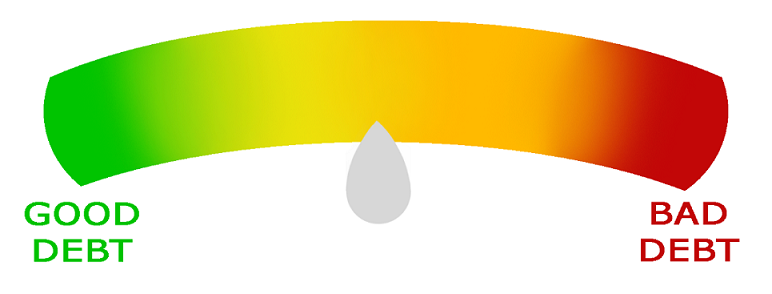
BNPL is neither inherently harmful nor universally beneficial. It functions as a short-term credit mechanism that can help manage timing differences between income and expenses.
The practical issue is scale. When used occasionally, it behaves like a convenience tool. When used repeatedly across multiple retailers, it becomes a parallel credit system that is harder to monitor.
The key distinction is whether repayments remain a small part of monthly cash flow or gradually become a fixed structural commitment.
Understanding that difference is central to assessing its role in personal finance planning.